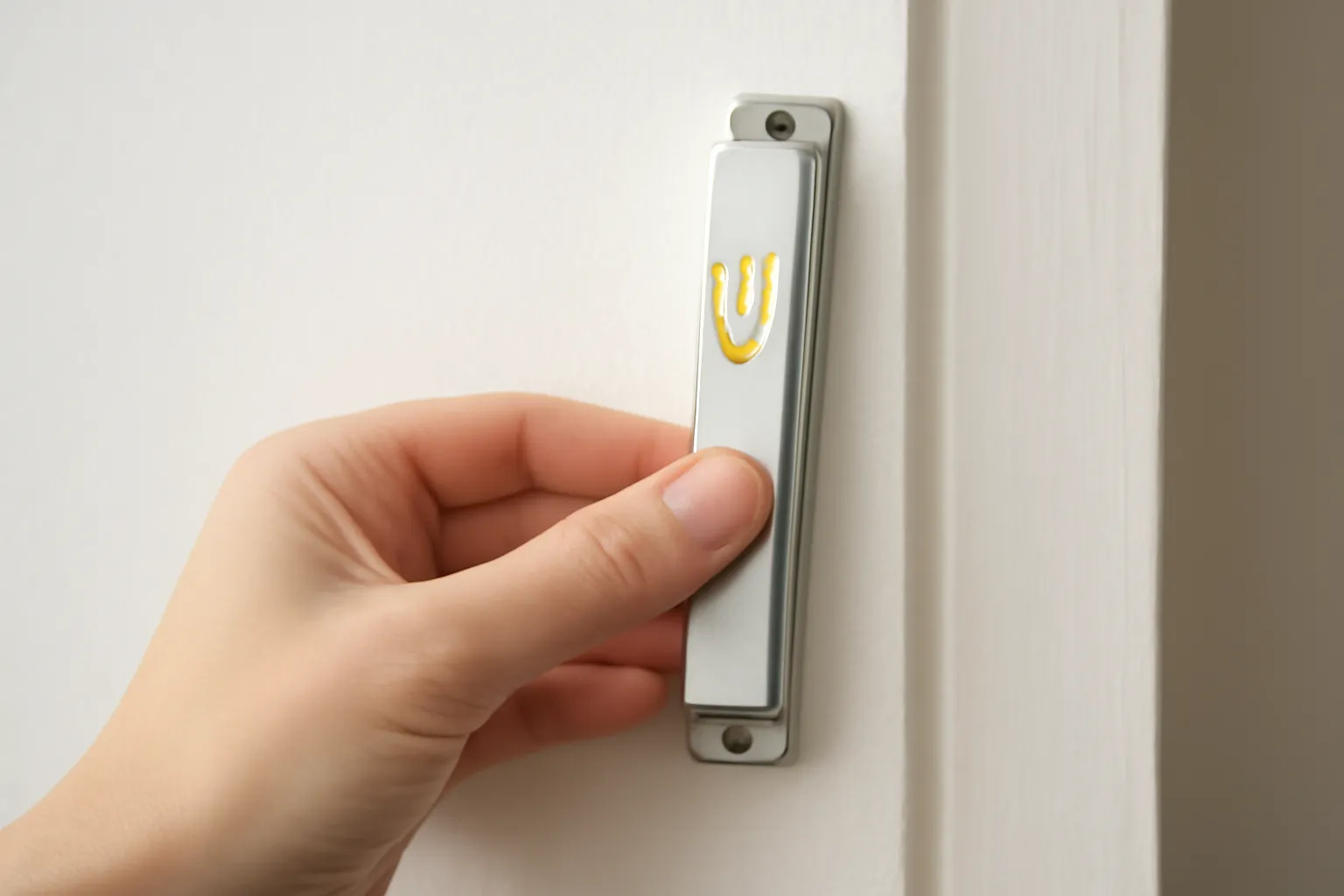
Affixing a mezuzah is a traditional Jewish ritual that combines ritual object care with daily home life. This article offers a thorough, practical guide to the process, including what you need, how to determine placement, and the step-by-step actions involved in mounting a mezuzah on doorways. We’ll cover variations in customs, the blessing (or its omission), and practical tips to help you perform this important mitzvah with care and respect.
What is a Mezuzah and Why Do We Put It Up?
A mezuzah is more than a decorative cover on a doorpost. It contains a small parchment inscribed with specific Hebrew passages from the Torah—the Shema Yisrael and a continuation from Deuteronomy. The parchment is rolled and placed inside a protective case. The commandment to affix a mezuzah is rooted in Torah verses such as Deuteronomy 6:4-9, 11:13-21, and is traditionally fulfilled on the doorways of Jewish homes and certain rooms. The act serves as a daily reminder of faith, the unity of God, and the sanctity of the home.
When we speak about how to put up a mezuzah, we are describing both a physical installation and a moment of intention. The scroll inside the case must be written by a qualified scribe (a sofer) on kosher parchment (often called klaf). The handwriting must be precise, and the text must include the accompanying verses as prescribed. The installation itself is a mitzvah (commandment) performed by people who observe these traditions, though the basic method is accessible to anyone who follows the proper steps or consults a rabbi for guidance on the appropriate customs for their community.
Materials and Tools You Will Need
Before you start, gather the essential items. Having everything ready makes the process smooth and respectful.
Kosher mezuzah scroll (the text of Shema Yisrael and the other verses, penned by a sofer on kosher parchment).
Mezuzah case suitable for the scroll’s size and for the doorway where you will mount it.
Measuring tools (tape measure or ruler) and a pencil for marking placement.
Mounting hardware (two screws or nails, typically appropriate for the doorframe material). In some cases, strong adhesive mounting strips may be used, but screws or nails are standard for durability.
Drill or hammer (for doorframes that require screws or nails).
Optional: adhesive backing or mounting plates if you’re using non-traditional mounting methods or if you cannot drill.
Clean cloth (to wipe the area around the doorpost if needed) and a small screwdriver if you’re using screws.
In addition to the physical items, you’ll want to consider ritual considerations: the blessing, the correct direction the letters face, and the placement rules. Some families place the mezuza on specific doorposts within the home, while others focus on the main entrances. You’ll often find variations in height and orientation depending on tradition. When in doubt, consult a local rabbi or your synagogue’s guidance to align your installation with your community’s practice.
Placement, Orientation, and Halachic Considerations
Good placement is central to the practice of affixing a mezuzah. The general custom is to attach the case to the right-hand doorpost as you enter the room, on the interior side of the doorway. This aligns with the idea that the home is a space of welcome and sanctity. However, there are variations in height and exact positioning across communities, so it’s wise to follow your tradition or ask a rabbi for specifics.
Here are some common considerations to guide your decision, with notes on how to proceed in practical terms:
Doorposts: The mezuzah is typically placed on interior doorposts that are intended for human traffic. Some people also place mezuzahs on exterior doors or on interior rooms that are considered living spaces rather than storage rooms. If in doubt, check with your community’s guidance.
Right-hand side: As you pass through a doorway, affix the mezuzah to the right-hand post. This aligns with the customary practice in many communities.
Height and placement: The aleph or top of the mezuzah is commonly positioned at a standard height that is comfortable for the average adult to reach. Some traditions specify positioning the mezuzah at about shoulder or chest height, or about a third to two-thirds of the doorpost height from the floor. Because these practices vary, it’s best to follow your tradition or a rabbinic guide’s recommendation for exact measurements.
Permanence: The mezuzah is intended as a lasting fixture. If you ever remove or replace it, you should use a new scroll if the parchment has aged or become damaged, and re-mount in the same or a suitable position after checking with your tradition.
Order of rooms: In some homes, households may place mezuzahs on doorframes that lead into living spaces, bedrooms, and study rooms, while other spaces like bathrooms or storage rooms may be excluded according to local custom. The key idea is to mark spaces in which life transpires and to declare a sanctified home environment at those points of entry.
Many communities emphasize that the blessing should accompany the act of affixing the mezuzah, though some people choose to affix without reciting a blessing (for example if the scroll is being replaced or if someone is following a stricter practice regarding certain ceremonial steps). In any case, it’s wise to know that there are two common paths:
Blessing before affixing: If your tradition permits, you recite a blessing just before mounting the mezuzah. The blessing in Hebrew is typically rendered as: Baruch Atah Adonai Eloheinu Melech ha’olam asher kid’shanu b’mitzvotav v’tzivanu likboa mezuzah (transliteration: Blessed are You, Adonai our God, King of the Universe, who has sanctified us with His commandments and commanded us to affix a mezuzah).
Affixing without a blessing: Some people perform the act of affixing with the intention of fulfilling the commandment but refrain from reciting the blessing. This may be due to custom, personal practice, or circumstances (for example, if the installation is done by someone who is not observing that particular mitzvah in the moment).
Regardless of the exact wording or approach, you should ensure that the parchments inside the case are kosher and that the case is appropriate for the doorway. If you’re unsure, consult a rabbi or a knowledgeable member of your community. The aim is to perform the mitzvah with intention, reverence, and care for the text inside the scroll.
How to Put Up a Mezuzah: Step-by-Step Instructions
The following is a practical, sequential guide to putting up a mezuzah from start to finish. It’s designed to be useful whether you’re mounting one mezuzah or several across different rooms. I’ve arranged the steps to emphasize clarity and mindfulness, while keeping to a straightforward, repeatable process.
Choose the doorway and confirm intent. Decide which doorways will receive a mezuzah. Most homes reserve a mezuzah for main entrances and living spaces, but the exact list depends on tradition. Before you begin, set your intention to fulfill the mitzvah with respect for the text and the home’s sanctity. If you’re teaching children or guests, explain briefly what the mezuzah represents so the act becomes meaningful, not merely mechanical.
Inspect the scroll and the case. Examine the kosher mezuzah scroll for any signs of damage. A damaged parchment should be replaced by a new scroll written by a qualified sofer. Check the klaf (parchment) material for flexibility, and ensure the text is not faded. Open the mezuzah case and verify that it’s clean and ready to hold the scroll safely. If the case has a backside or clip, ensure you know how to open and secure it correctly.
Determine height and alignment. While exact measurements depend on community custom, decide on a height that makes the case easy to reach and visible to household members. Mark the doorpost with a pencil at the chosen height on the interior side. Many people prefer to have the top of the mezuzah a little below the top of the doorway, though traditions differ, so use a guideline you’ve agreed upon with your rabbinic guidance.
Prepare the doorpost surface. Wipe the marked area clean of dust or debris. If the doorpost is made of wood, you can drill pilot holes for the screws or nails. For brick or stone, use appropriate masonry anchors. If you can’t drill or prefer to avoid hardware, you may use sturdy adhesive mounting options designed for doorframes, though durability can vary.
Open the mezuzah case and insert the scroll. Gently place the parchment inside the case so that the text faces outward or in the intended orientation (check your case’s design). Ensure there is no folding or crumpling of the scroll. Carefully close the case so the parchment remains flat and protected.
Recite the blessing (if applicable). If your practice includes a blessing, say it just before affixing the mezuzah to the doorpost. For example:
Baruch Atah Adonai Eloheinu Melech ha’olam asher kidshanu b’mitzvotav v’tzivanu likboa mezuzah.
If you choose not to recite a blessing in your tradition, proceed to the next step with reverent focus on the mitzvah.
Mount the mezuzah. Position the case on the marked spot on the interior doorpost. Use two screws or nails to secure the mezuzah firmly. If you’re using screws, pre-drill pilot holes to prevent splitting the wood. If you’re using nails, tap them gently to avoid splitting the post. If you’re employing adhesive strips, press the mezuzah firmly for the recommended amount of time to ensure a strong bond. Ensure the case is level and stable.
Confirm the orientation and integrity of the scroll. After mounting, confirm that the scroll inside the case is still flat and that there is no tension on the parchment. If the scroll has shifted, gently adjust the case and re-secure. Make sure the text is visible and legible from minor viewing angles, as the memory of the text is a central piece of the mitzvah.
Document the moment. For many families, installing a mezuzah is a meaningful family moment. Consider taking a photo or noting the date of installation in a family record. This helps preserve the memory of the mitzvah and the home’s religious life for future generations.
Repeat as needed for other doorways. If you’re mounting mezuzahs on multiple doorframes, repeat the steps above for each location. Use consistent orientation, placement rules, and mounting method across all doors to maintain uniformity and to honor the practice.
Check maintenance and replacements. Periodically inspect the mezuzahs, especially after renovations or if you notice any moisture, damage, or deterioration of the scroll. A damaged scroll or a compromised case should be repaired or replaced, following the guidelines of your tradition or by consulting a sofer or rabbi.
In addition to the step-by-step process, here are practical tips to help ensure a smooth installation and long-lasting mezuzahs across your home.
Use a kosher scroll written by a qualified sofer. The legitimacy of the text matters, since the mitzvah depends on the content of the scroll. If you’re unsure about the quality or authenticity, ask your rabbi for guidance.
Protect the parchment by keeping it in the case and avoiding exposure to moisture, heat, or direct sunlight. The parchment should remain flat and dry to preserve its legibility and sanctity.
Choose a durable case that fits the scroll and withstands regular door traffic. A loose case can cause damage to the scroll or the mounting surface.
Consider the room’s function when deciding where to place mezuzahs. Some spaces—the kitchen, bathroom, or other high-humidity areas—may require extra care to protect the scroll and ensure multiple doorways receive mezuzahs in line with tradition.
Involve others in the process when appropriate. Teaching children or guests about the mezuzah can be a meaningful way to share tradition and foster respect for the ritual.
Record-keeping: If your tradition emphasizes keeping track of installations, consider logging each door’s mezuzah placement, date of installation, and any notes about the scroll’s condition for future maintenance.
Different Ways to Say It: Variations of “How Do You Put Up a Mezuzah?”
To keep the article semantically broad and accessible, we can phrase the central question in several ways. Each variation reflects a different aspect of the process or audience, while remaining true to the core practice.
How to install a mezuzah in a home, including practical steps and blessings.
Steps for mounting a mezuzah on interior doorposts and entrances.
What you need to know to affix a mezuzah with guidance on tradition and materials.
Guided process to affix a mezuzah for those new to the practice.
Procedures for hanging a mezuzah—from obtaining the scroll to securing the case.
Mounting a mezuzah step by step for a clear, chronological workflow.
The Ritual and Significance: A Brief Look at What This Means
Beyond the mechanical steps, the act of putting up a mezuzah carries spiritual significance. The parchment’s words—the Shema Yisrael and the other verses from Deuteronomy—are embedded with the command to remember God’s unity and to teach these words to future generations. Mounting the mezuzah is a daily ritual that not only marks a doorway but also marks a state of awareness: the home itself as a space of sanctity and memory. For many families, the ritual fosters a sense of continuity with their ancestors’ practices and creates a ritual rhythm that can be passed from generation to generation.
In addition to the direct commandment, the mezuzah project can serve as a teaching moment: a chance to discuss the text, its language, and its meaning with children and guests. It is also an opportunity to reflect on the home’s purpose: shelter, nourishment, and communal life. The mezuzah is, in many ways, a living symbol of memory, identity, and tradition in the everyday flow of life.
Common Questions and Clarifications
Do you need a blessing every time you put up a mezuzah?
The answer varies by tradition. Some communities recite a blessing before affixing the mezuzah, while others perform the action without a blessing, due to local custom or situational factors. If you’re unsure which practice to follow, consult your rabbi or the guidance of your synagogue. The blessing, when recited, should be said with intention and reverence for the text inside the case.
What qualifies as a “kosher scroll”?
A kosher scroll is written on proper parchment by a trained sofer, following halachic rules for letter forms and spacing. The scroll contains the two columns of verses beginning with the Shema Yisrael and the continuation that follows in Deuteronomy. The parchment should not show signs of significant wear or damage, and it should be rolled and placed inside a protective mezuzah case that shields it from moisture and damage.
Is there a difference between a mezuzah on interior doors and exterior doors?
Traditions differ. Some communities place mezuzahs on interior doorways that lead to living spaces, while others extend the practice to exterior doors or entry doors as well. The general principle is to mark gateways that are used regularly and to maintain a sense of sanctity as people move through the home. If you’re dealing with exterior doors or weathered frames, you may need a more durable mounting solution and a case designed for higher exposure, and you should follow local guidance on whether such placements are customary for your community.
What should I do if I can’t drill into the doorpost?
If drilling is not possible, you can consider alternative mounting options that are compatible with your doorpost material, such as strong adhesive backing or mounting hardware designed for brick, stone, or wood. However, these alternatives may require checking the durability over time, as they may be less secure than screws or nails. In all cases, ensure the scroll remains safe and the case remains properly affixed to the doorpost.
Care and Maintenance of Your Mezuzahs
After you have completed the installation, ongoing care helps preserve the mitzvah’s integrity and the scroll’s longevity.
Regular checks: Periodically check all mezuzah installations to ensure the case is secure and the scroll is intact. Look for signs of moisture, warping, or damage.
Weather considerations: In areas with high humidity, winter condensation, or direct sun exposure, consider additional protection for the scroll and a more robust case to minimize wear.
Replacement and re-writing: If a scroll becomes damaged or illegible, replace it with a new one written by a qualified sofer. Do not attempt to repair damaged scrolls yourself, as the integrity of the text is essential to the mitzvah.
Cleaning the case: Gently wipe the mezuzah case with a dry cloth. Avoid harsh cleaners that could damage the exterior or interior surfaces of the case and the scroll.
A Final Note on Tradition and Individual Practice
Remember that the above guide presents a clear, practical approach to putting up a mezuzah. Because customs vary between families, synagogues, and communities, you’ll often find slight differences in the exact placement, height, and whether to recite a blessing. The most important aspects are respectful handling of the text, proper preparation of the scroll, and a mindful approach to the installation process. If you’re ever unsure, consulting a knowledgeable rabbi or a trusted teacher in your tradition will help you align the installation with your community’s standards and your personal practice.
Closing Thoughts: The Everyday Significance of the Mezuzah
Mounting a mezuzah is not only a ritual action; it is an ongoing reminder that the home is a place of memory, identity, and spiritual life. By following a careful, respectful process—gathering the right materials, choosing the appropriate doorposts, reciting (or not) the blessing, and ensuring the scroll’s integrity—you participate in a time-honored practice that connects present-day life with ancient tradition. With care, knowledge, and a sense of purpose, you can complete a thorough, meaningful installation that will serve the home and its inhabitants for years to come.
If you’d like to adapt this guide to your own community’s customs, or if you want to see this article framed for a specific cultural context, I’m happy to tailor the steps, wording of the blessing, or placement guidelines to match your traditions. The underlying goal remains the same: to honor the mitzvah, protect the sacred text, and cultivate a home of meaning and continuity through the simple act of affixing a mezuzah.